Quick Facts
Houseplant and tender evergreen tree
1
Easy to grow from the seed of an avocado fruit
2
Place in a wam, bright location
3
Like humidity and moist compost
4
Usually need replacing after a few years
5


Before you get started
What are avocados?
Avocados ( Persea americana ) are tender evergreen trees from Mexico and Central America. They are often grown as houseplants in the UK, raised from the large seed in the centre of the fruit.
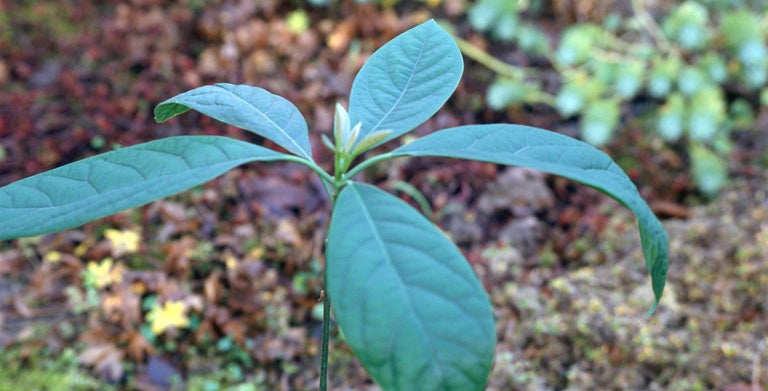
Growing from seed is an easy and interesting project for all ages. The resulting plant will grow into a slender tree with large, glossy leaves all year round.
There are hundreds of avocado cultivars, but few are readily available in the UK. The fruits sold in UK supermarkets are mainly knobbly-skinned 'Hass' and smoother, green-skinned cultivars, probably 'Fuerte' or 'Ettinger'. Other cultivars may sometimes be available – it's worth looking out for them, so you can experiment with germinating different types.
Avocado plants won’t generally flower or fruit when grown as houseplants. After a few years, they tend to go into decline, so are usually considered short-term plants. Still, it’s easy to grow replacements.
If you want avocado plants to produce fruit, you'll usually need more and light than in most homes. You also need a lot of space and patience, as the trees can grow to several metres tall before they are mature enough to flower, which can take ten years or more. A large, warm, humid greenhouse or conservatory may be suitable.
Buying avocado plants
Avocado saplings are sometimes available online. These are usually tender 'Hass' avocados, so need the same growing conditions as above. You may possibly find grafted plants on a dwarfing rootstock, which means the plants may stay more compact. Grafted plants may be more likely to fruit. For more about the benefits of , see our guide to grafting .
There are some hardier avocado cultivars, such as 'Wilma', but these are not generally available in the UK.
See our guide to buying plants by mail order .
Ongoing Care
Given good light, and plenty of water, avocado plants should thrive indoors for several years.
Positioning
Avocado plants are best grown in containers in a warm, bright spot indoors. They can also be grown in a heated greenhouse .
You can move an established plant outdoors for the summer, into a warm, sheltered spot in dappled shade, especially in milder areas of the UK.
In winter, keep plants indoors at 13–18°C (55–65°F). Larger plants may survive lower temperatures, possibly in an enclosed porch, cool conservatory or greenhouse, but must generally be kept frost-free.
Watering and humidity
Water as needed in spring and summer, especially in hot, sunny spells. Reduce watering in winter. See our guide to watering .
Make sure the is neither excessively wet nor completely dry. The leaves may curl up if the plant is overwatered, and may go brown and drop if underwatered.
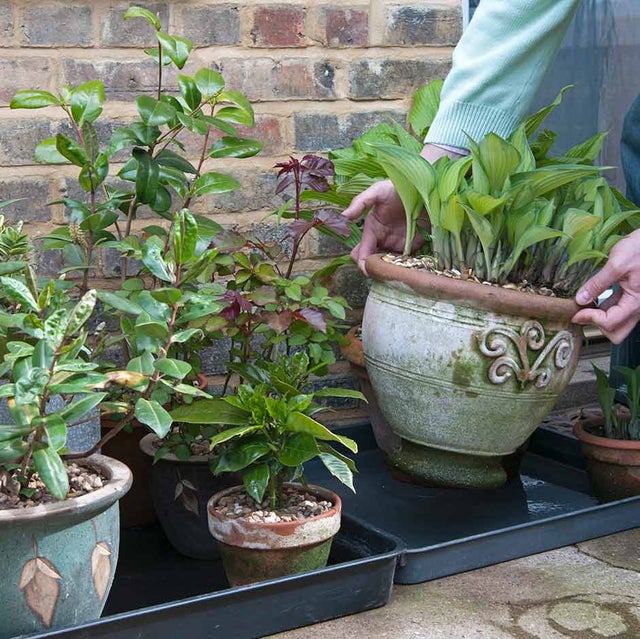
Avocados like humid air. To increase humidity around the plant, mist the foliage regularly, or stand the container in a tray of damp gravel. Make sure the water level is just below the base of the container, so the compost doesn't become .
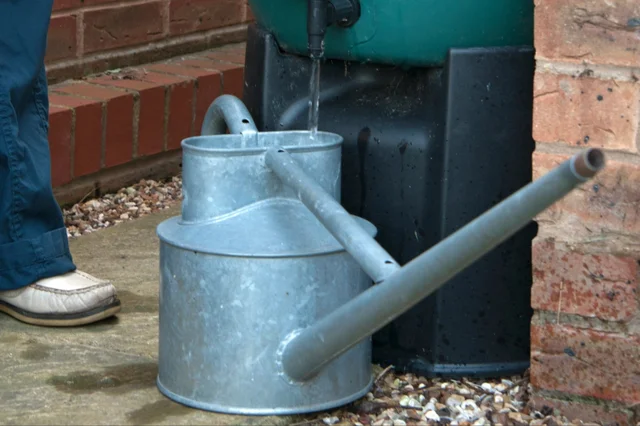
Feeding
To encourage strong growth, apply a general-purpose houseplant feed during spring and summer, following the frequency and dose rate recommended on the packet. For the rest of the year, feed every six to eight weeks.
Re-potting
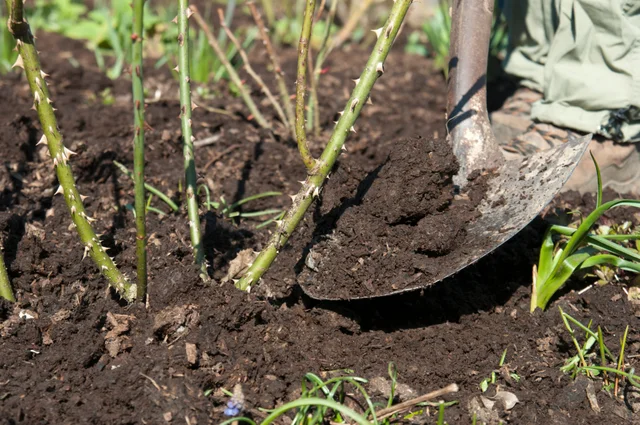
Young plants grow rapidly and should be re-potted regularly. Move into a new container that is just slightly larger, as soon as you see roots emerging from the drainage holes. Avoid overpotting into too large a container.
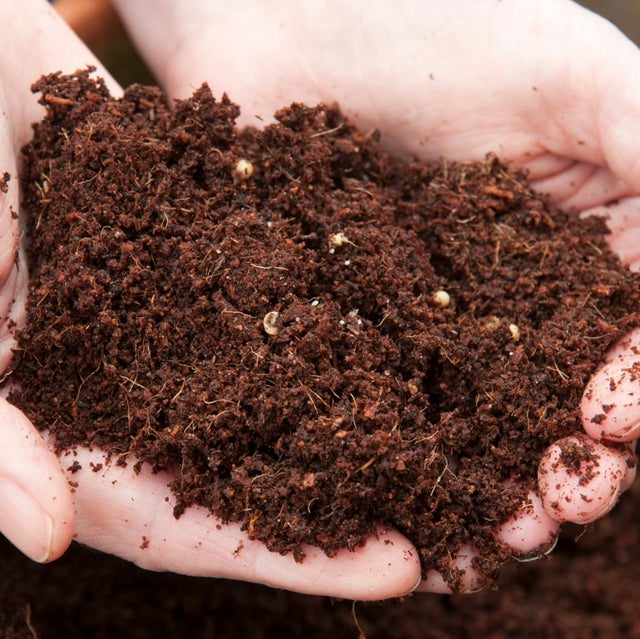
Use soil-based, free-draining compost, such as peat-free John Innes No 3, with added .
should be re-potted annually in spring, into a slightly larger container.
For more on looking after plants indoors, see our guide to houseplants .
Overwintering
Avocado plants can be moved outdoors in summer, but should be brought indoors before temperatures drop, and kept at 13–18°C (55–65°F) over winter.
Large plants may possibly survive lower temperatures, so it may be worth experimenting if yours has outgrown its space indoors. It may survive in a cool greenhouse or sunny sheltered porch, especially if wrapped in fleece , but it is a risk. In very mild parts of the UK or warm city gardens, established plants may even survive outside in a very sheltered, frost-free spot.
See our guide to overwintering tender plants in conservatories and our guide to wrapping tender plants .
Caring for older plants
Avocados generally grow well as houseplants for a few years, but eventually start to decline, becoming spindly with yellowing leaves. This is often due to insufficient humidity and light, so they may fare better in a humid, heated greenhouse or conservatory.
Alternatively, once a plant starts to look past its best, you could simply replace it with a new one raised from seed.
Pruning and Training
With young plants, once they reached 15cm (6in) tall, cut back the main stem by half to encourage branching. Make your cut just above a leaf.
As the plants grow further, the shoot tips regularly to encourage branching. This will help to create bushy, well-shaped plants.
If an older plant gets too tall and spindly, you can prune it back hard and it should recover well. Still, it is often easier to replace older plants once they start to show signs of deterioration.
Propagating
It's easy to grow avocado plants from the large seed inside shop-bought fruits. You can either start them off in water or sow straight into damp, peat-free . You can do this at any time of year. Seeds may be slow to germinate, but the resulting should grow rapidly.
In water
- Find a wide-necked jar or tumbler and fill with water
- Pierce the avocado seed with four cocktail sticks, about halfway up. Rest the sticks on the rim of the jar, so the seed is suspended vertically inside, with the rounded end just in the water
- Keep at 20–25°C (68–77°F). Change the water regularly, and keep it topped up so the base of the seed is kept continually moist
- The seed will split and a root, then a shoot, will form. This can take eight weeks or more. Once the plant has several leaves and a lots of fibrous roots, remove it from the jar and plant it
- Fill a pot with peat-free John Innes No 2 potting . Plant carefully, spreading out the roots and positioning the seed so it sits vertically, halfway exposed at the surface. Water regularly
In compost
- Soak the seed in hot water, at 40–52°C (104–125°F), for 30 minutes
- Cut a thin slice from the pointed end
- Position the seed upright in a pot of moist, sandy peat-free seed compost, with the cut end upwards, sitting slightly above the surface
- Water to moisten the compost, then place on a sunny windowsill, at 20–25°C (68–77°F)
- Keep the compost slightly damp. should take four to eight weeks
Aftercare
- When the main stem has reached 15cm (6in) tall, cut it back by half to encourage branching. Make your cut just above a leaf
- Once it has grown another 15cm (6in), the two newest sets of leaves so the shoots branch again
Problems
After two or three years, avocado plants often begin to show signs of leaf discoloration and deterioration. This may be due to the dry atmosphere and low light levels in our homes.
Re-potting into a slightly larger container with fresh may revive them temporarily. They may also fare better in a conservatory or warm greenhouse , or in a warm, sheltered spot in the garden over the summer. Still, it is generally best to regard these as short-term foliage plants, to be replaced every few years.
Fruiting
Avocado plants won't usually flower or fruit when grown as houseplants – they need more humid conditions, as well as lots of space, and patience. Trees can take ten years or more to reach fruiting size and may need to be several metres tall. A large, warm, humid greenhouse or conservatory may be suitable, but even then it can be difficult to get them to fruit successfully in the UK.
Pests and diseases
Several pests and diseases can affect avocado plants, so check them regularly. The earlier you spot any problems, the easier they are to remedy. Look out for:
- aphids
- fungal leaf spots
- glasshouse whitefly
- mealybugs
- red spider mites
- root rots (Phytophthora)
- thrips